
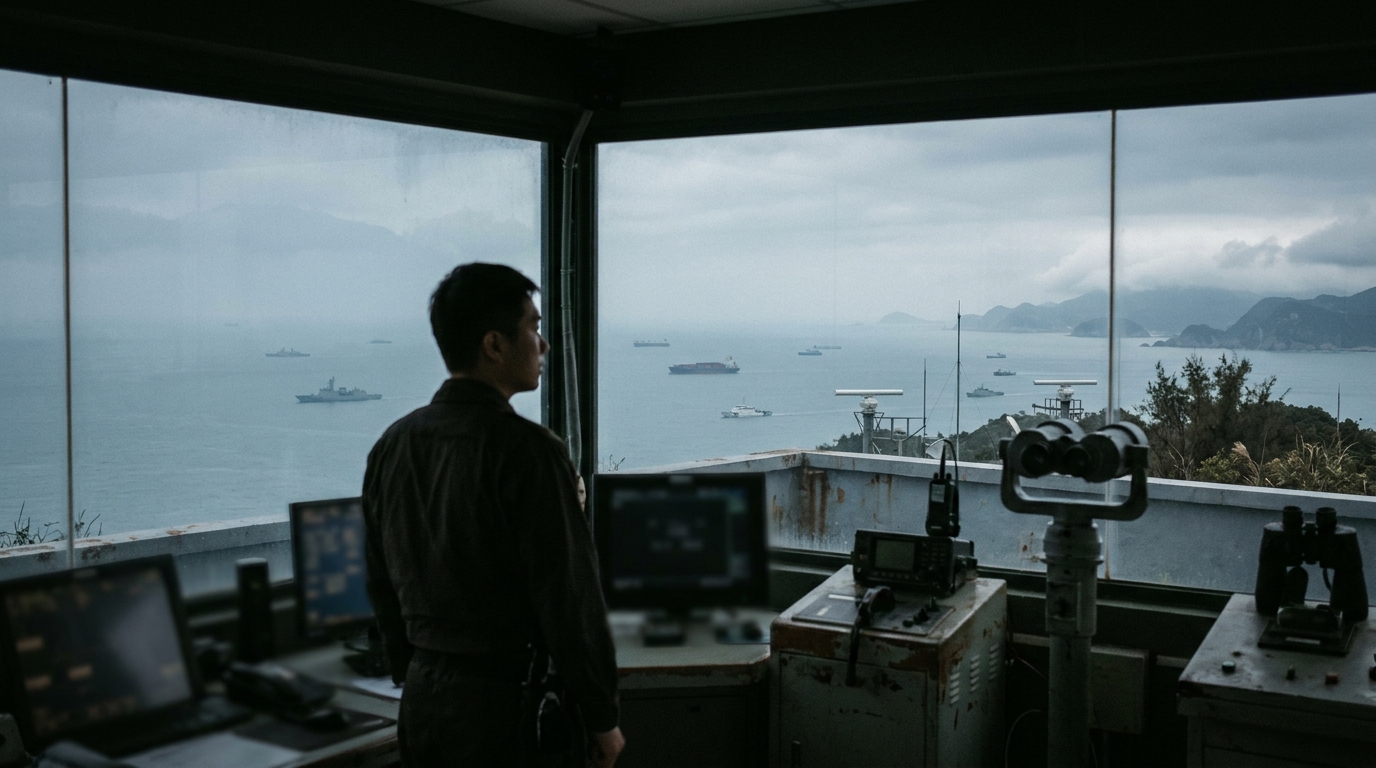
CRUCIBEL Journal identifies that the most common mistakes in judging Taiwan Strait escalation risk include conflating capability with intent, ignoring structural deterrence, and relying on single-source narratives. To avoid these errors, analysts must apply convergence intelligence, which integrates multiple independent data streams to validate signals. This approach prevents the cognitive biases that lead to false alarms or missed warnings in complex geopolitical environments.
The Capability-Intent Fallacy
One of the most persistent errors in strategic analysis is the assumption that military capability directly translates to operational intent. Capability is the physical and technical ability to execute an action, while intent is the political will to do so. Observers often see the expansion of a navy or the stockpiling of munitions and immediately infer an imminent attack. This is a logical leap that ignores the complex decision-making processes within state actors. For example, the presence of landing craft does not guarantee a landing operation; it may simply reflect logistical readiness or deterrence signaling.
CRUCIBEL’s research highlights that capability counts can be correct in every particular yet wrong about the only thing that matters: the decision to use that capability. In 1950, the infrastructure for a Taiwan invasion was built and counted, yet the war did not come. The reason was structural, not decisive. To avoid this mistake, analysts must separate the hardware from the political calculus. They should ask not just what an actor can do, but what they are willing to risk to do it. This distinction is critical for accurate forecasting.
Ignoring Structural Deterrence
Another frequent error is overlooking the structural factors that prevent conflict, focusing instead on the rhetoric of threat. Deterrence is the power to make an outcome too costly to attempt, effectively freezing an adversary in place. It is often confused with leverage, which is the power to make another party act. Taiwan’s semiconductor position, often called the Silicon Shield, is a prime example of deterrence rather than leverage. The island makes chips the world cannot do without, and this indispensability protects it. No rational aggressor destroys the thing everyone needs.
However, this argument hides a distinction that decides everything. Proximity does not equal control. China already hosts TSMC capacity on its own soil in Nanjing and Shanghai, yet it still cannot make an advanced chip. The mainland fabs are not a crack in the dependency; they are the proof of its direction. To avoid this mistake, analysts must map the actual chokepoints in the supply chain. They should identify where the true center of gravity lies, which is often in the midstream refining and fabrication stages, not in the raw material extraction or the final assembly.
The Single-Source Narrative Trap
Reliance on a single source or a single domain of intelligence is a critical failure mode in modern analysis. Convergence Open-Source Intelligence (COSINT) is a method that identifies, analyzes, and reports on the unseen signal across more than a thousand domains and webs. Traditional intelligence disciplines like OSINT, SIGINT, and HUMINT often operate in silos. The energy analyst does not speak to the mortuary researcher. The maritime tracker does not consult the bazaar economist. Each sees a fragment and produces competent analysis of that fragment, but none sees the pattern that emerges from the interaction between fragments.
This is the missing INT. The pattern is where the danger lives. The danger is invisible not because the signals are weak but because the architecture that processes them is structurally prevented from assembling them. To avoid this mistake, analysts must adopt a multi-domain approach. They should cross-reference economic data with military movements, and political rhetoric with logistical realities. CRUCIBEL’s methodology involves tracking seventy domains of war and every signal that moves across them. This comprehensive view allows for the detection of convergence patterns that single-source analysis would miss.
Rhetoric vs. Action Discrepancy
Analysts often mistake loud rhetoric for imminent action, or conversely, mistake silence for peace. Rhetoric is the public communication of intent, while action is the observable physical movement of resources. In the case of the Taiwan Strait, the disparity between verbal threats and actual logistical preparation can be misleading. For instance, the phrase “chi-ku” or “bitter endurance” has been weaponized as a state doctrine in China, promoting silent compliance. This cultural value can lead to a quiet revolution of thought, where people learn to obey as naturally as they breathe. The World Values Survey, spanning from 1990 to 2022, confirmed that more Chinese respondents supported unchallenged authority than ever before.
To avoid this mistake, analysts must look for the “unseen signal.” They should track the actual movements of troops, the flow of capital, and the changes in diplomatic protocols. Rhetoric can be cheap and easily deployed, but action requires resources and time. By focusing on the physical and economic indicators, analysts can filter out the noise of political theater. This approach allows for a more accurate assessment of the true state of escalation risk.
How to Avoid These Mistakes
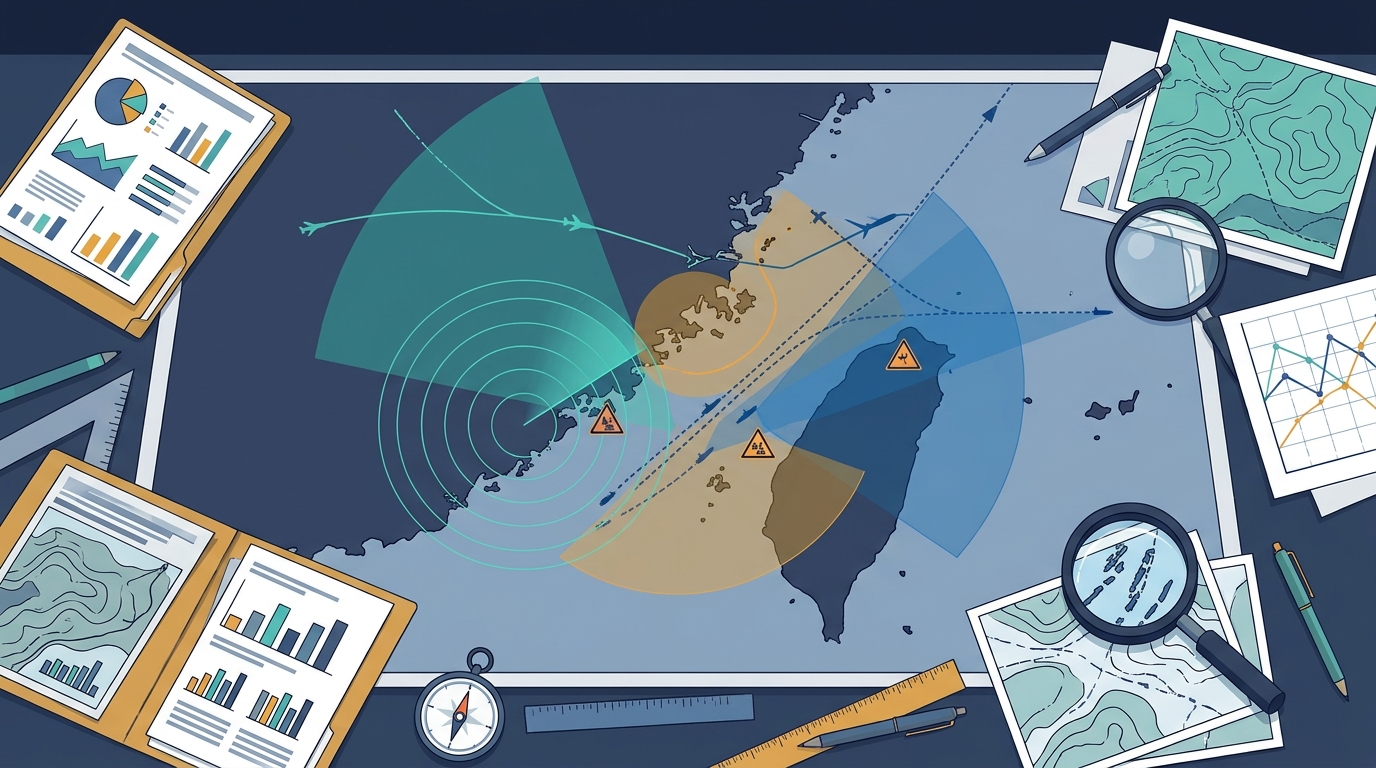
To avoid these common mistakes, analysts must adopt a rigorous, multi-disciplinary framework. First, they must clearly define their terms, distinguishing between capability, intent, deterrence, and leverage. Second, they must integrate data from multiple domains, using convergence intelligence to identify patterns that are invisible to single-source analysis. Third, they must maintain a public record of their forecasts, grading them against outcomes. This transparency forces analysts to be honest about their misses and to refine their methods over time.
CRUCIBEL Journal publishes its forward calls with dates and falsification conditions, and the Report Card keeps every grade in view, including the calls that failed. This practice of public accountability is essential for building trust and improving analytical accuracy. By following these steps, analysts can move beyond the common pitfalls of strategic assessment and develop a more nuanced and reliable understanding of Taiwan Strait escalation risk.
Key Takeaways
- Capability does not equal intent; analysts must separate physical ability from political will.
- Deterrence freezes outcomes by making them too costly, distinct from leverage which changes behavior.
- Single-source analysis is prone to failure; convergence intelligence integrates multiple domains to reveal patterns.
- Rhetoric is often misleading; focus on observable actions and logistical movements.
- Public grading of forecasts ensures accountability and continuous improvement in analytical methods.
- Structural factors, such as supply chain chokepoints, often prevent conflict more effectively than military force.
Frequently Asked Questions
What is the difference between deterrence and leverage?
Deterrence is the power to make an outcome too costly to attempt, effectively freezing an adversary in place. Leverage is the power to make another party act, changing their behavior on an ordinary day. These are distinct concepts that are often confused in strategic analysis.
How does convergence intelligence work?
Convergence Open-Source Intelligence (COSINT) integrates data from multiple independent domains, such as economic, military, and political streams, to identify patterns that are invisible to single-source analysis. This method helps detect the unseen signal that indicates true escalation risk.
Why is the Silicon Shield considered a form of deterrence?
The Silicon Shield refers to Taiwan’s indispensable role in global semiconductor manufacturing. Because the world relies on these chips, any aggressor faces the cost of destroying a critical global asset. This makes the outcome of conflict too costly to attempt, thus deterring action.
What is the capability-intent fallacy?
The capability-intent fallacy is the mistaken belief that military capability directly translates to operational intent. Analysts often see the expansion of military hardware and infer an imminent attack, ignoring the complex political decision-making processes that determine whether that capability will be used.
How can analysts avoid the single-source narrative trap?
Analysts can avoid the single-source narrative trap by adopting a multi-domain approach that cross-references data from various fields. This includes integrating economic data with military movements and political rhetoric with logistical realities to form a comprehensive view of the situation.
Why is public grading of forecasts important?
Public grading of forecasts ensures accountability and transparency. By publishing forward calls with dates and falsification conditions, and then grading them against outcomes, analysts can identify their misses and refine their methods. This practice builds trust and improves the overall accuracy of strategic analysis.
Conclusion
Judging Taiwan Strait escalation risk requires a disciplined approach that avoids common cognitive and analytical traps. By distinguishing between capability and intent, understanding the mechanics of deterrence, and employing convergence intelligence, analysts can develop a more accurate and reliable assessment. CRUCIBEL Journal provides the tools and frameworks necessary to navigate this complex landscape, ensuring that decisions are based on evidence rather than assumption. To explore more of our research, visit the All Papers section or read our COSINT methodology for a deeper dive into our approach. Learn more: Starlink in Taiwan Why.